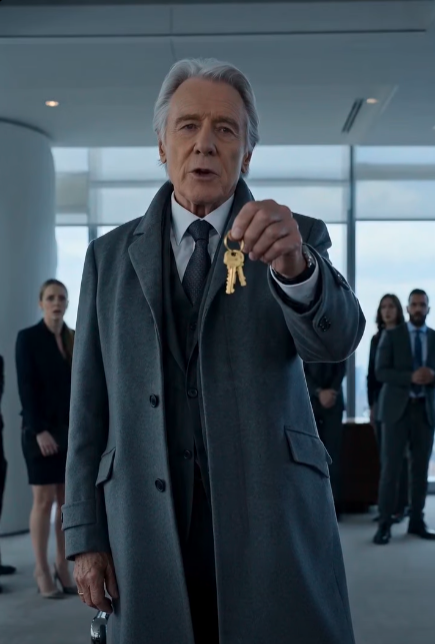
The boardroom, an expansive glass-walled sanctuary of opulence, was usually a place where decisions were made with cold efficiency. Today, it was a stage for a petty, uncontrolled explosion of ego. The Director, a man whose ambition had long ago outpaced his maturity, paced the length of the mahogany table, his face mottled with rage.
“You are a relic!” he shouted, his voice echoing off the floor-to-ceiling windows. “I don’t care about your ‘long-term vision’ or your ‘legacy’ protocols. I want you out! This firm is moving in a new direction, and you’re just dead weight—a nobody who thinks he still matters in a world that’s moved on!”
With a dismissive, violent flick of his wrist, he swiped the old man’s sleek, well-worn laptop off the table. It clattered against the hardwood floor, the screen shattering, a digital casualty of the Director’s tantrum. The surrounding staff, most of whom had spent years terrified of the Director’s whims, looked down at their tablets, paralyzed by the sheer toxicity of the scene.
The old man in the gray coat didn’t flinch. He didn’t rush to save his machine. He sat in his chair for a long, agonizing moment, his breathing slow and rhythmic. Then, he stood up. He moved with a grace that suggested he had occupied this room long before the Director was born.
From the deep inner pocket of his coat, he produced a heavy, ornate ring of keys. They were forged from gold and brushed steel, each one cut with an intricate, proprietary design that bypassed every standard security override in the building.
He held them up. The light from the ceiling caught the metal, casting long, sharp shadows across the Director’s face.
“You call me dead weight,” the man said, his voice quiet, lacking any of the theatrical rage that defined the Director. “But you’ve spent your entire tenure here operating on a lease that was signed based on my personal approval.”
The Director laughed, though it sounded brittle and high-pitched. “Your approval? You’re a consultant! I’m the head of this entire division!”
The man walked toward the boardroom door and clicked a single key into the digital lock—not to exit, but to command the entire floor’s infrastructure. Every light in the tower dimmed, then shifted to a deep, authoritative blue. The elevators locked into emergency mode. The display panels on the wall, previously showing the company’s quarterly growth, switched to a single, bold title: PROPERTY OF THE ELIAS ESTATE.
“You aren’t the head of anything,” the old man said, his gaze as cold and immovable as the granite foundations of the tower. “I am Elias. I built this building, I designed the foundation, and I own every square inch of the company you think you manage. And as of this morning, I have decided to terminate the building’s lease and your employment contract simultaneously.”
The Director’s knees buckled. He reached out for the table, but the mahogany surface felt suddenly fragile. The security guards, who had been called to escort the “old man” out, were standing at the door—but they were bowing their heads in a respectful salute to the owner of the tower.
“You have ten minutes to clear your personal belongings,” the old man continued, his voice echoing through the silent, blue-lit boardroom. “After that, the automated locks will engage, and you will be escorted out by the real staff. Never mistake a man’s willingness to listen for his inability to act.”
As the old man walked toward the window, looking out over the city he had helped shape, the Director stood frozen in the middle of the room. The arrogance that had fueled him for years drained away, replaced by the crushing, absolute realization that he had just spent his last hour in power throwing tantrums in the kingdom of the man he had tried to destroy.
