The Bride Who Bought the Altar and Everything Standing Upon It
The slap still burned against Vivienne’s skin, a sharp, white-hot line of pain that grounded her in the reality of the moment. She didn’t flinch. Instead, she let the silence stretch, watching as the guests—men who measured their worth in quarterly earnings and women who wore their family names like armor—began to murmur. Their phones were humming in unison, a symphony of notifications that signaled the end of the Sinclair empire.
Richard Sinclair stepped closer, his face draining of color until he looked like a wax figurine melting under the intense heat of the chandelier. He knew the name Moreau. Every man in this room knew the name. It was the name that appeared on the eviction notices of the companies they thought they had safely acquired, the name that turned up in the margins of their most secretive contracts.
“Vivienne,” Richard whispered, his voice cracking. “What have you done?”
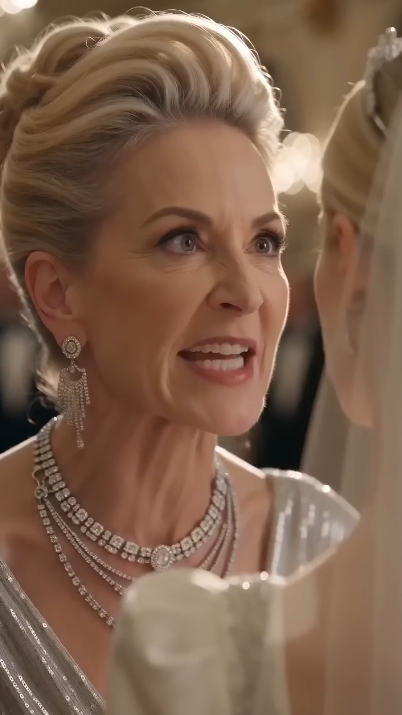
Vivienne didn’t look at him. She stared straight ahead at Margaret, who was still clutching her silver gown, her face a chaotic map of confusion and dawning horror. Margaret’s arrogance had been built on the assumption that she was the highest predator in the room, never suspecting that she was merely a guest at her own funeral.
“I’ve done exactly what you invited me to do, Richard,” Vivienne said, her voice cool and steady, echoing off the high ceilings. “I came here to sign a contract. I just didn’t realize you hadn’t bothered to read the fine print.”
A man in the front row, a hedge fund manager who had spent the last hour fawning over the Sinclair family, dropped his phone. The sound clattered on the marble floor like a gunshot. He stared at the screen, then at Vivienne, his mouth hanging open in a silent, trembling plea for grace.
The notification was simple. Moreau Global had triggered a clause in the Sinclair Holdings debt restructuring agreement. The merger, the estate, the liquid assets—everything that constituted the Sinclair family’s social standing had been transferred to a shell company in the last sixty seconds. They were effectively guests in their own wedding venue.
Margaret finally found her voice, though it was nothing more than a ragged, high-pitched gasp. “This is a prank. A stunt. You’re a maid, a nobody, a—”
“I am the person who owns your mortgage, Margaret,” Vivienne interrupted, her tone devoid of malice. “I am the person who bought your debt for pennies on the dollar because your husband’s business acumen was as hollow as your etiquette.”
Vivienne turned her gaze to the crowd, the sea of black tuxedos and burgundy gowns shifting away from the Sinclairs as if the family were radioactive. The social hierarchy of the room had inverted. The bride was no longer a person to be scorned; she was the architect of their ruin, and everyone present was terrified of being caught on the wrong side of her ledger.
Richard looked around the room, seeing the cold, calculated distance of his peers. He saw the way the world turned on its axis when the money stopped flowing. He reached out to grab Vivienne’s arm, a desperate, pathetic gesture, but he stopped when her gaze shifted to him. There was no hatred in her eyes, only a profound, crystalline indifference that was far more damaging.
“Your son is in the study,” Vivienne said. “I suggest you go to him. I’ve already canceled the marriage license, and the security team I’ve hired is currently waiting outside to escort you off the property. You have twenty minutes to remove your personal effects.”
“You can’t do this to us,” Margaret screamed, the facade of the elegant matron finally shattering completely. “We are the Sinclairs! We have a name!”
“Names are just words written on paper, Margaret,” Vivienne replied. “And I’ve just shredded the paper.”
She stepped away from them, her wedding dress sweeping across the floor. The train, which had seemed like a symbol of her submission only moments ago, now felt like a banner of command. She walked toward the grand staircase, and the guests parted before her, an opening of the sea that marked her transformation from a pawn into the queen of the board.
She didn’t look back at the couple she had systematically dismantled. Her goal had never been the Sinclair family; her goal had been the restitution of everything they had stolen from her father’s firm a decade ago. Every dollar they had laundered, every reputation they had scorched, had been tracked, audited, and finally, reclaimed.
The silence in the ballroom was total. Even the waitstaff had stopped moving, their trays poised in the air as they witnessed the total collapse of the family they served. Vivienne reached the top of the stairs and looked down at the hall, at the scattered champagne flutes and the discarded dignity of her former in-laws.
She felt a strange, cooling sensation behind her ears, the adrenaline finally beginning to ebb. She reached up and pulled the diamond tiara from her hair, letting it tumble down to the marble floor below. It struck the ground with a dull, unimpressive thud, rolling toward Richard’s feet.
He didn’t pick it up. He just watched it, a man who had finally realized that his life’s work was just as hollow as the piece of jewelry lying in the dust. He looked small, insignificant, and utterly defeated.
Vivienne walked into the upper gallery and through the heavy oak doors that led to the private balcony. The night air was refreshing, smelling of jasmine and the distant, cooling promise of rain. Below, she could hear the chaotic scramble of the Sinclairs trying to salvage what they could, but it sounded like the chatter of birds from another continent.
It was over. The game had been played, the trap had been sprung, and the victory was complete. She took a deep breath, letting the night wind whip the veil from her shoulders. She wasn’t just a wealthy woman or a corporate raider; for the first time in years, she was simply herself.
She took a seat on the velvet bench overlooking the garden, watching the black sedans of the Sinclair family exit the estate gates one by one. There was no triumph in the sight, only a profound sense of restoration. She hadn’t sought revenge for the sake of causing pain; she had sought it to balance an account that had been left open far too long.
Her phone buzzed again. It was a message from her legal team, confirming the transfer of the properties and the dissolution of the corporate ties. She read it, smiled, and tucked the phone away. She had a life to rebuild, not as a Sinclair, but as the woman who had survived them.
The mansion was finally quiet. The lights in the ballroom were being dimmed by the remaining staff, who were already moving to secure the doors. She stood up and walked toward the master suite, intending to change out of the wedding gown that felt like a relic of a dead past.
She paused at the door, catching her reflection in a tall, gilded mirror. She looked at the red slap mark on her cheek, tracing it with her thumb. It was a scar, yes, but it was also a reminder of the price of admission. She had paid for her freedom in blood, in time, and in patience.
She washed her face, the water cool and invigorating against her skin. She shed the satin and the lace, the weight of the elaborate dress falling to the floor in a heap. She dressed in simple, comfortable clothes, clothes that didn’t demand attention or command respect.
She walked out of the house, bypassing the grand entrance, and headed toward the smaller, private garden at the rear. She didn’t have a destination yet, and she didn’t have a plan beyond the next hour. For the first time in her life, the future was an unwritten page, and the pen was finally in her hand.
She stepped out into the night, the grass soft and cool beneath her feet. The garden was silent, the stars overhead bright and unblinking. She took a deep, steadying breath, the air filling her lungs with the scent of pine and earth. She was whole. She was free. And for the first time in a decade, she was finally home.
